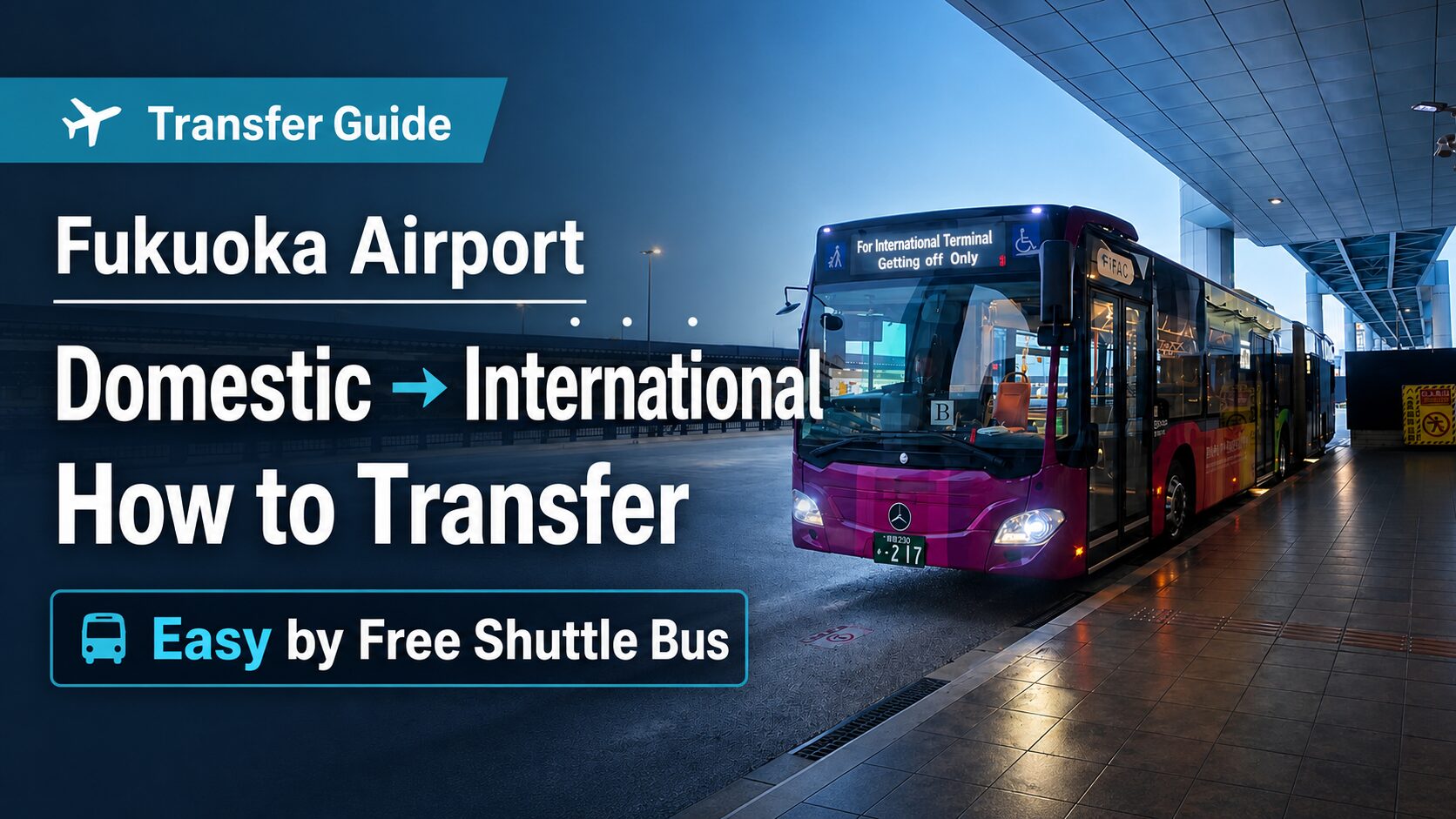
【Fukuoka Airport FUK】How to Transfer from the Domestic Terminal to the International Terminal|Easy Guide Using the Free Shuttle Bus
やぎちゃん
Yagichan’s Fishing & Travel Blog
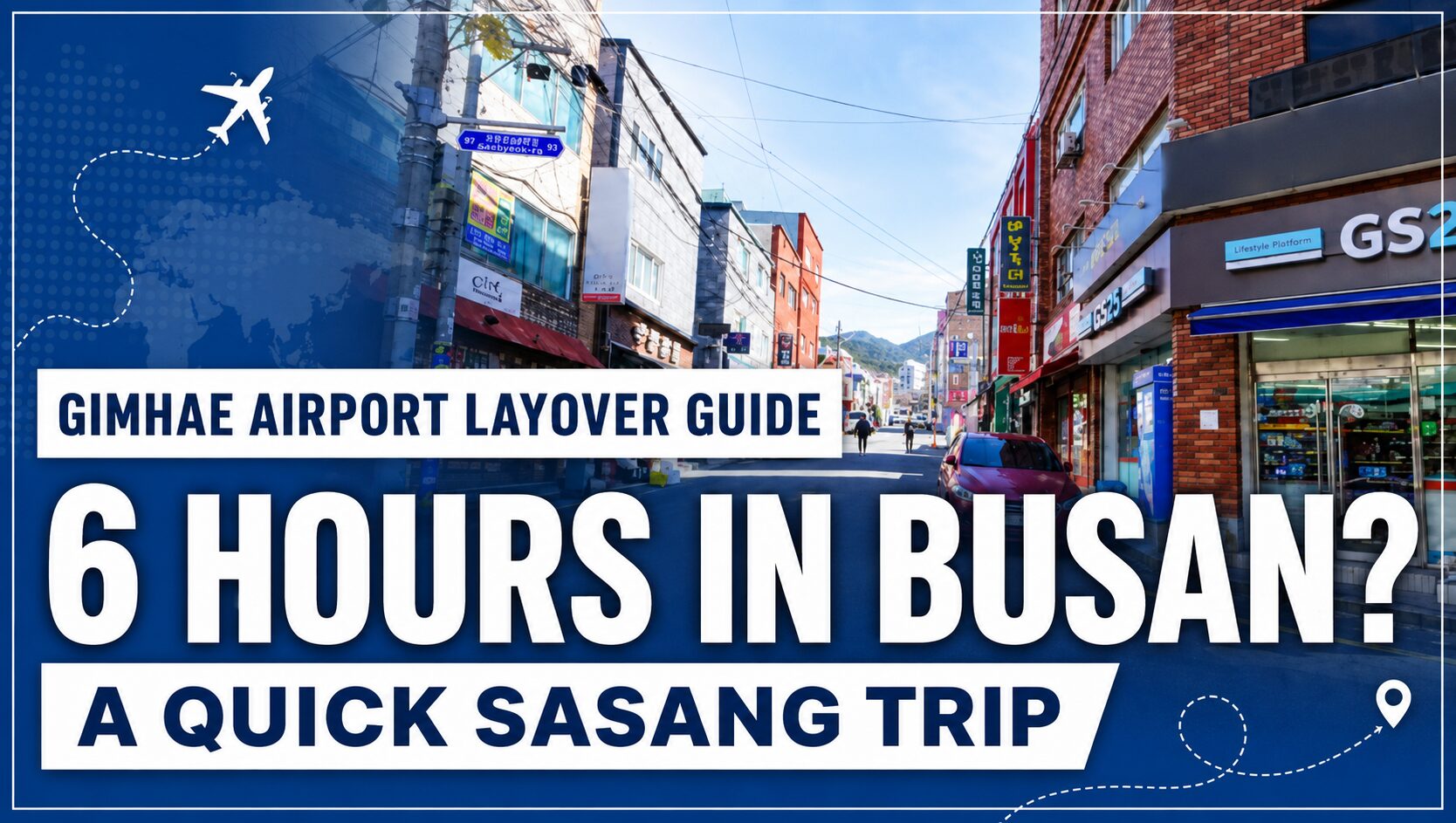
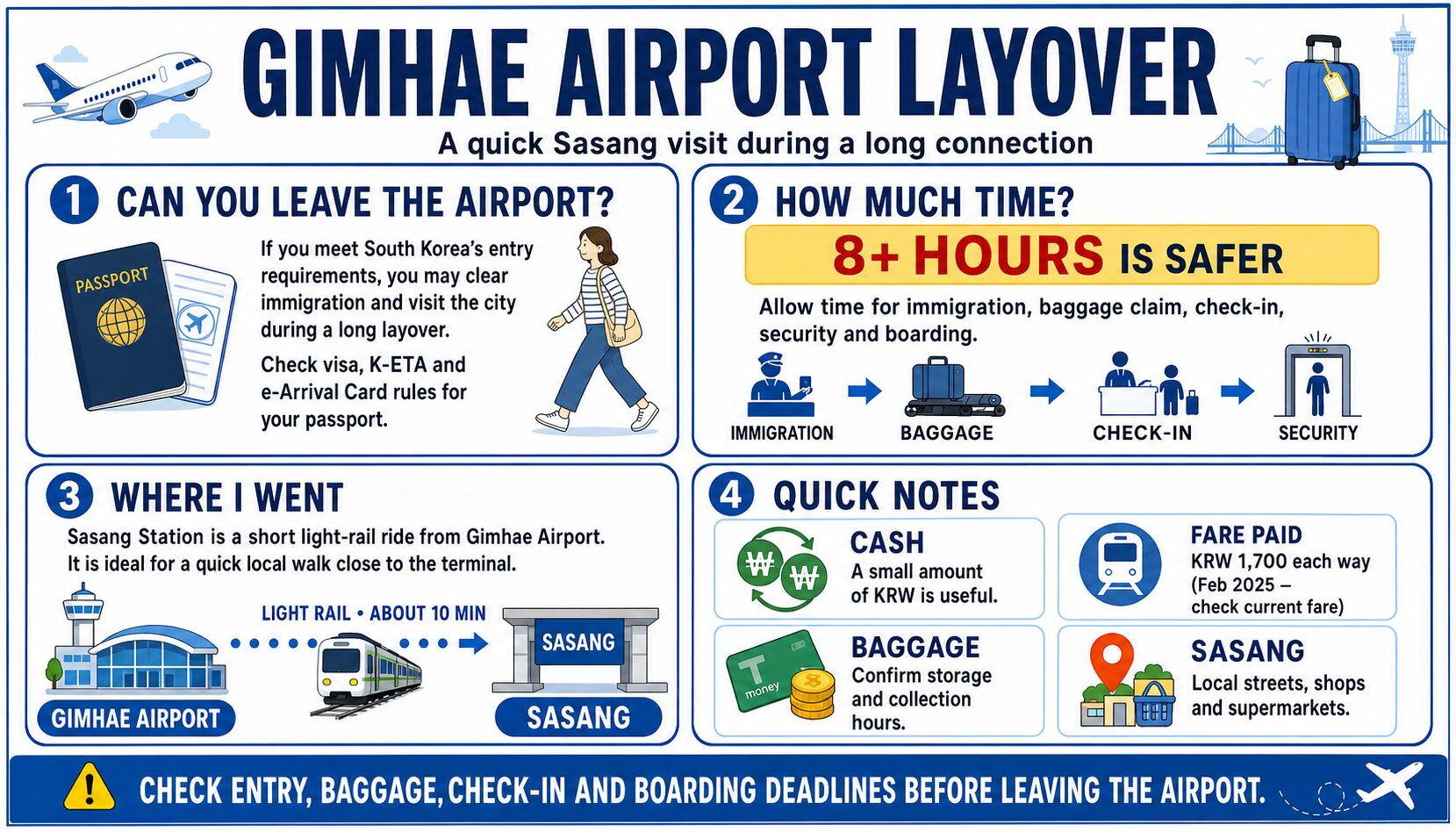
A 6–8 hour layover at Gimhae International Airport can be enough for a short visit to Sasang, but only if you are allowed to enter Korea, your baggage and onward check-in are under control, and your arriving flight is on time. For a self-transfer, I would allow more time and aim to be back at the terminal at least 2.5–3 hours before an international departure.
Hi, I’m Yagi. On a trip through South Korea, I had a long daytime layover at Gimhae International Airport (PUS), the main airport serving Busan. Instead of spending the entire wait inside the terminal, I entered Korea, stored my large backpack and took the light rail to Sasang for a brief local walk.
This guide explains what the trip was actually like, how much time to allow and what you should check before leaving the airport. My visit took place in February 2025; entry rules, fares, baggage services and operating hours can change, so I have separated my firsthand experience from information that must be checked before travel.
Yes, provided that you meet South Korea’s entry requirements and have enough time to complete immigration, collect any checked baggage, return to the airport, check in again if necessary, pass security and reach your gate before boarding closes.
Depending on your nationality and status, you may need a visa, a K-ETA or an e-Arrival Card. South Korea has extended the temporary K-ETA exemption for eligible countries and regions through December 31, 2026. Travelers using that exemption may still be required to submit the free e-Arrival Card within three days before arrival. K-ETA holders are generally exempt from the arrival card.
These are conservative planning estimates, not guarantees. Always follow your airline’s check-in and boarding deadlines. If the arriving flight is late, immigration is busy or you cannot store your baggage promptly, skip the outing.
I arrived at Gimhae at about 10:00 and my next flight departed at 17:50. Because the flights were booked with different airlines, I had to collect my baggage in Busan. That added more steps than a protected connection with baggage checked through to the final destination.
Sasang was a sensible choice because it is close to the airport. I treated the visit as a short neighborhood walk, not a full Busan sightseeing trip, and kept a wide margin for the return journey.
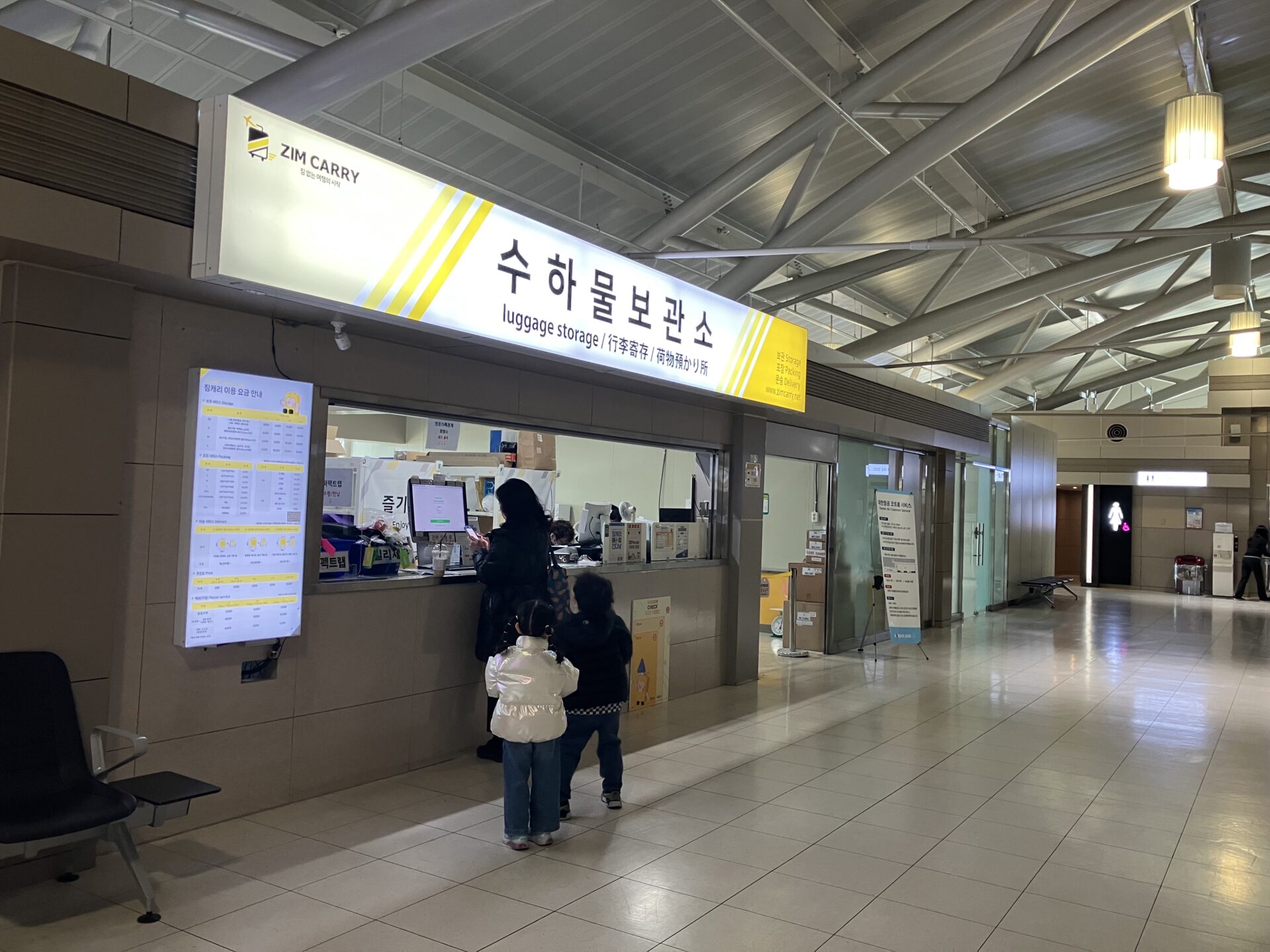
Leaving my 70-liter backpack at the airport made the outing much easier. I used a ZIM CARRY baggage service in the international terminal and paid KRW 8,000 for six hours in February 2025.
The Busan-Gimhae Light Rail links the airport with Sasang. The ride itself is short—about 10 minutes in my experience—but allow additional time to walk between the terminal and station, buy a ticket, wait for the train and find the correct exit at Sasang.
I paid KRW 1,700 each way for a single-use ticket in February 2025. Fares and payment methods can change, so check the machine display or station information when you travel. Carrying a small amount of Korean won is a useful backup even if you mainly use a card.
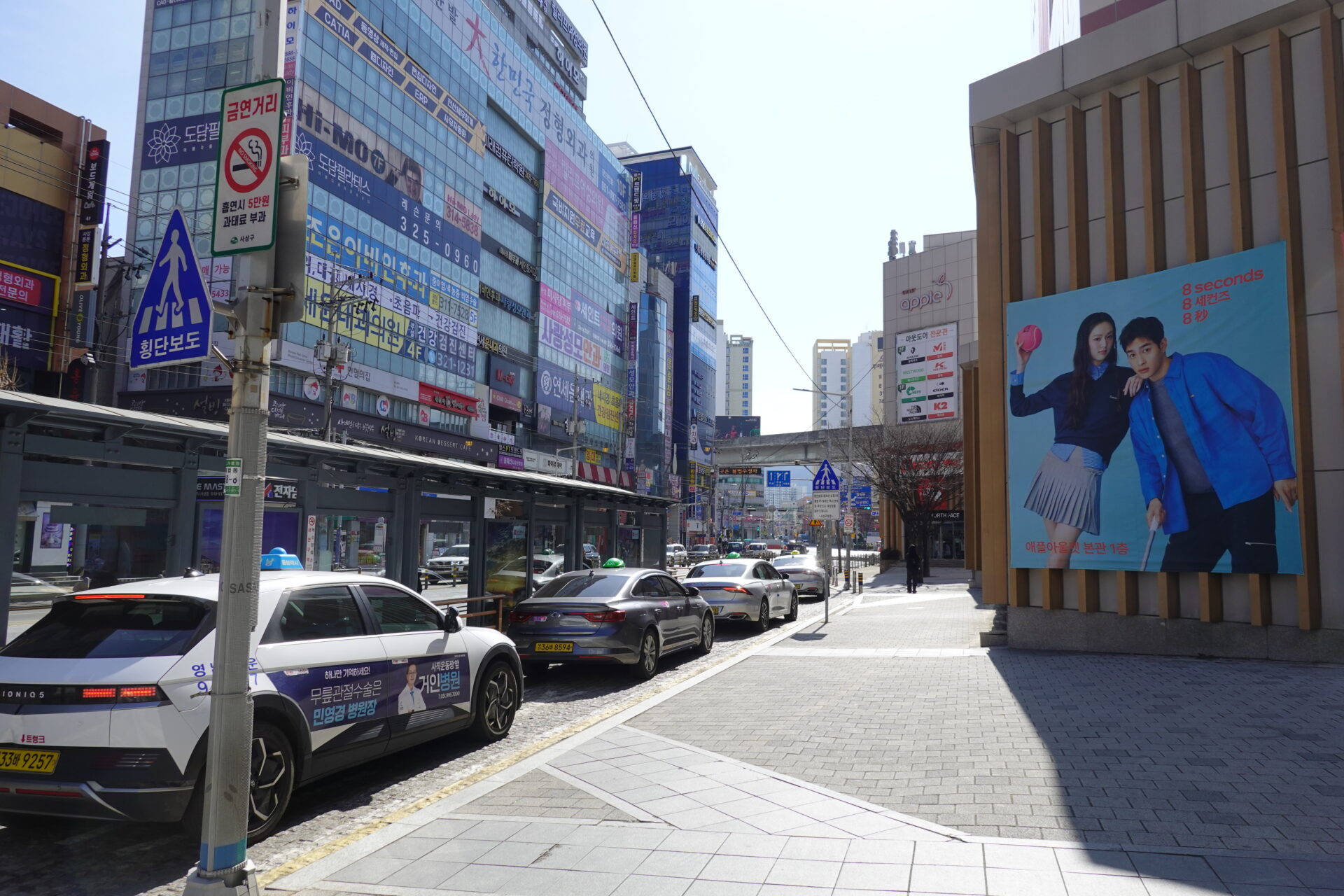
Sasang is not the place to rush through Busan’s headline attractions. Its appeal during a short layover is the chance to step into an everyday neighborhood: browse local shops, pick up a drink, walk through side streets and visit a supermarket without traveling far from the airport.
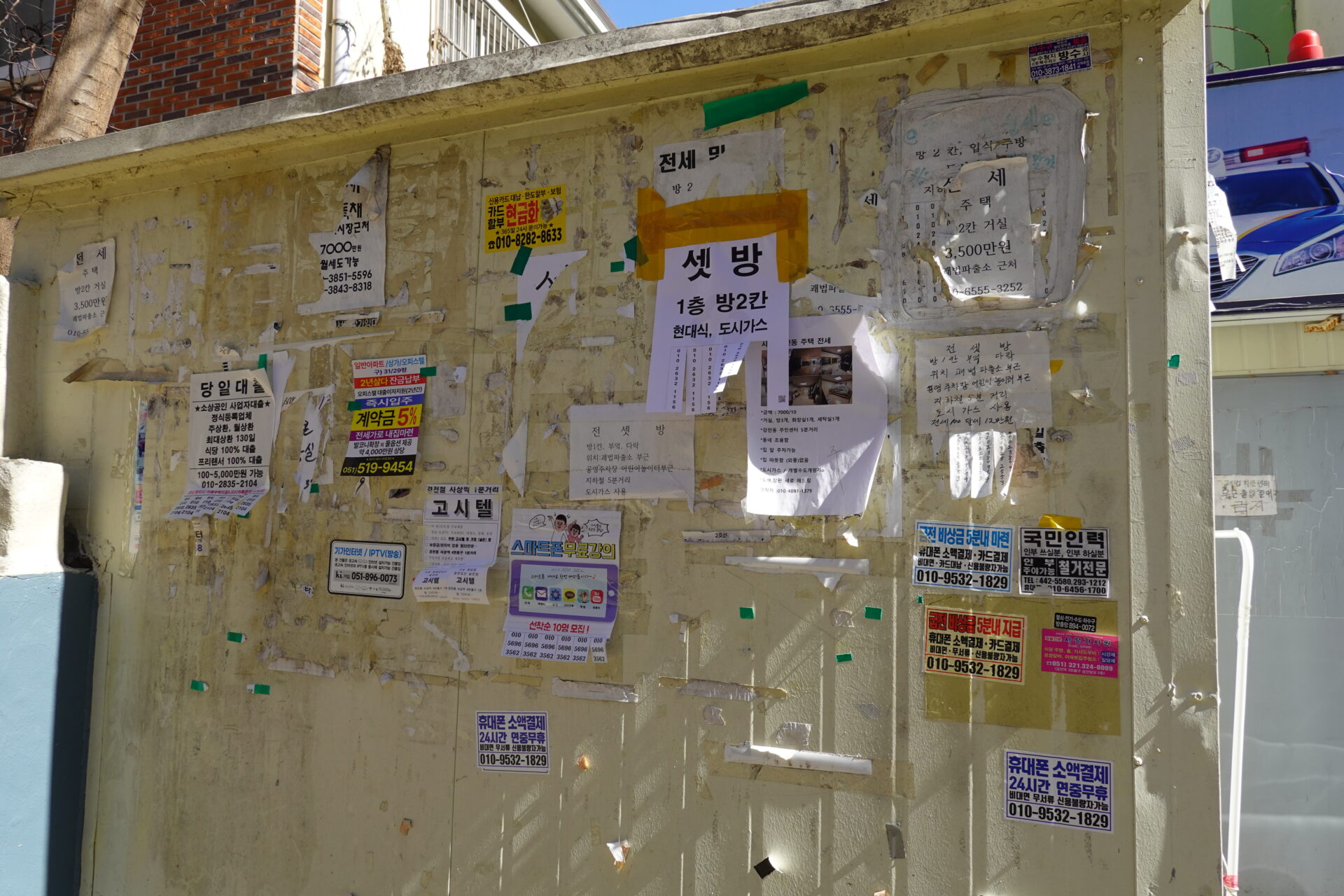
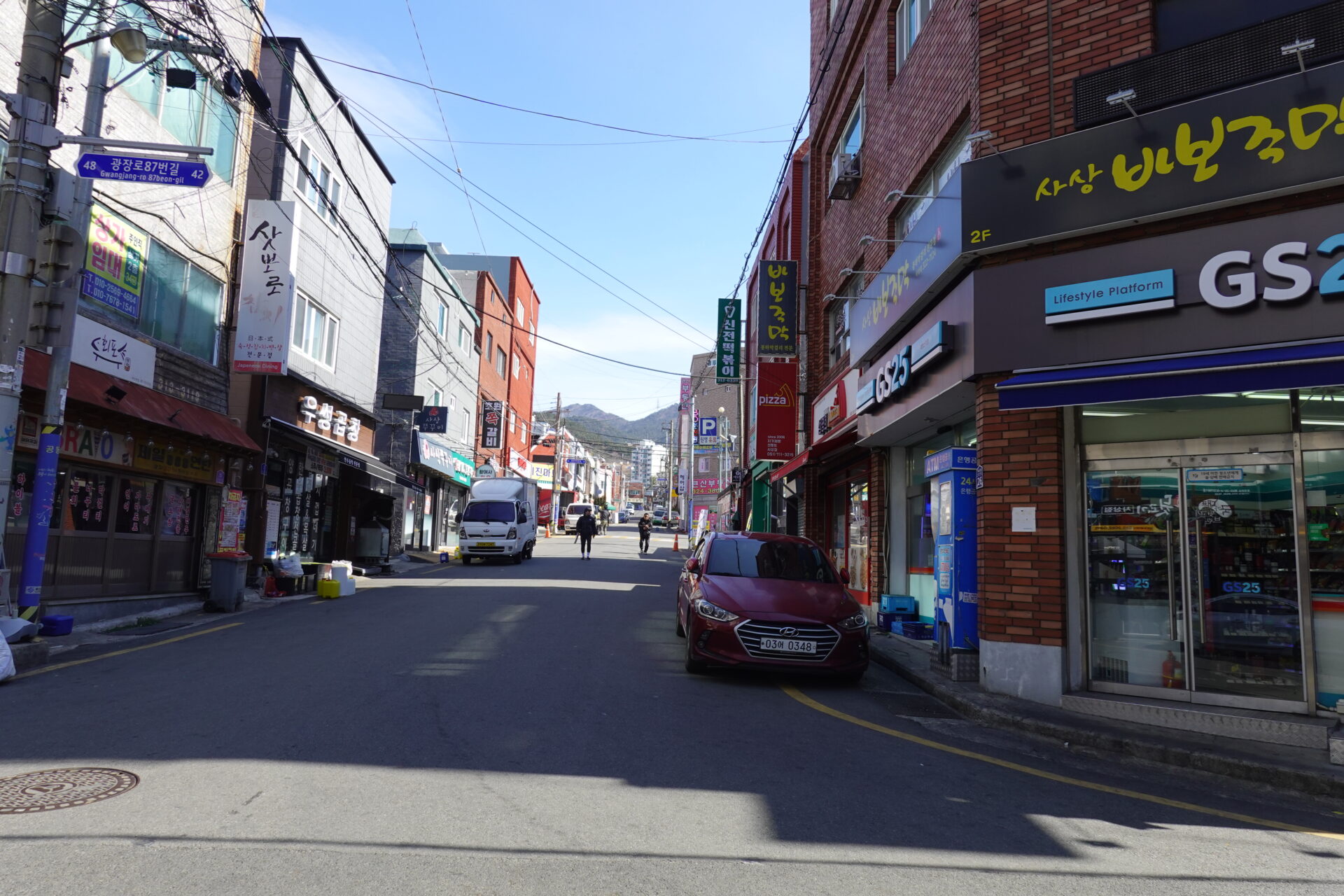
I especially enjoyed the backstreets, where the city felt more local than touristy. Keep your route simple and save unfamiliar areas for a longer visit.
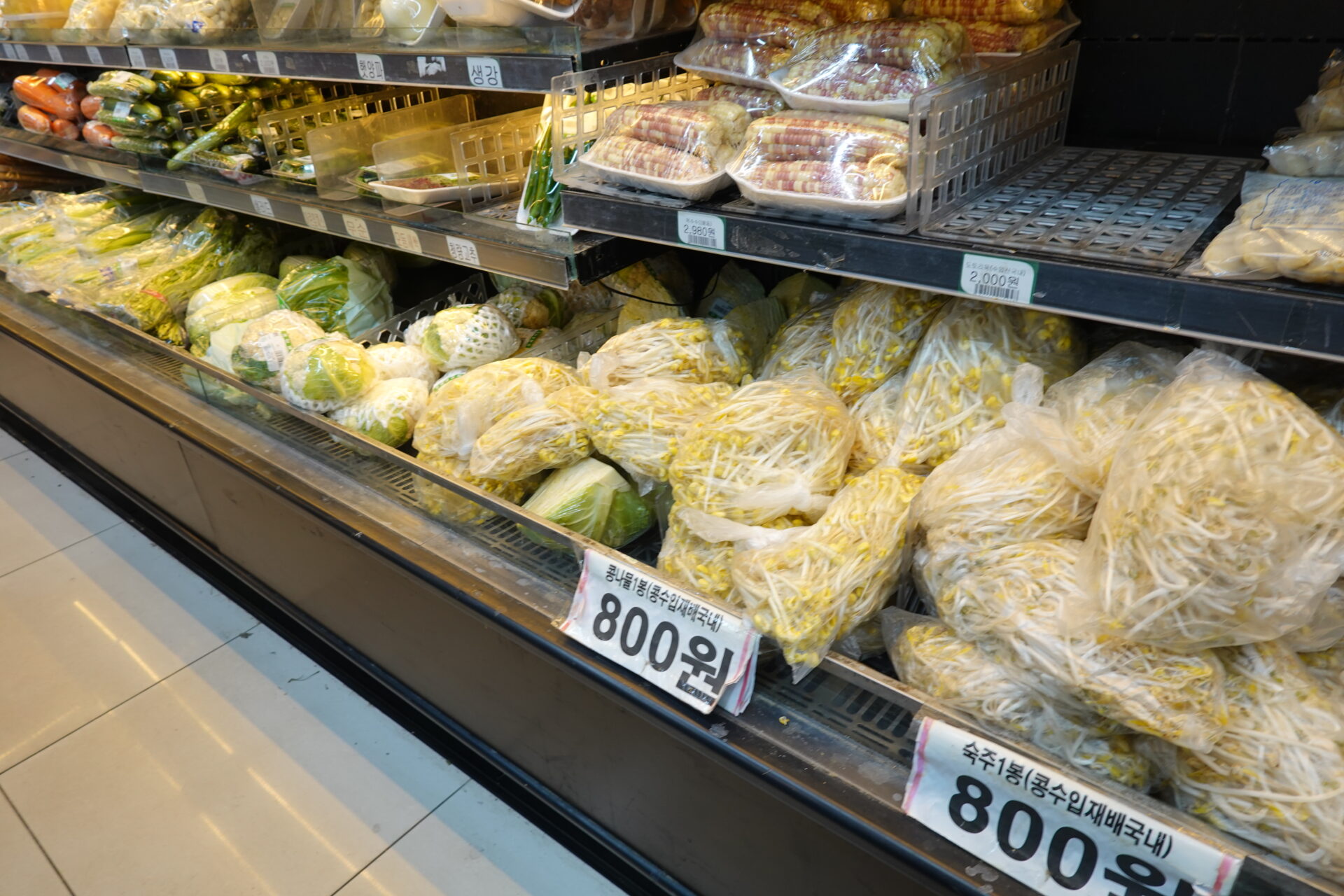
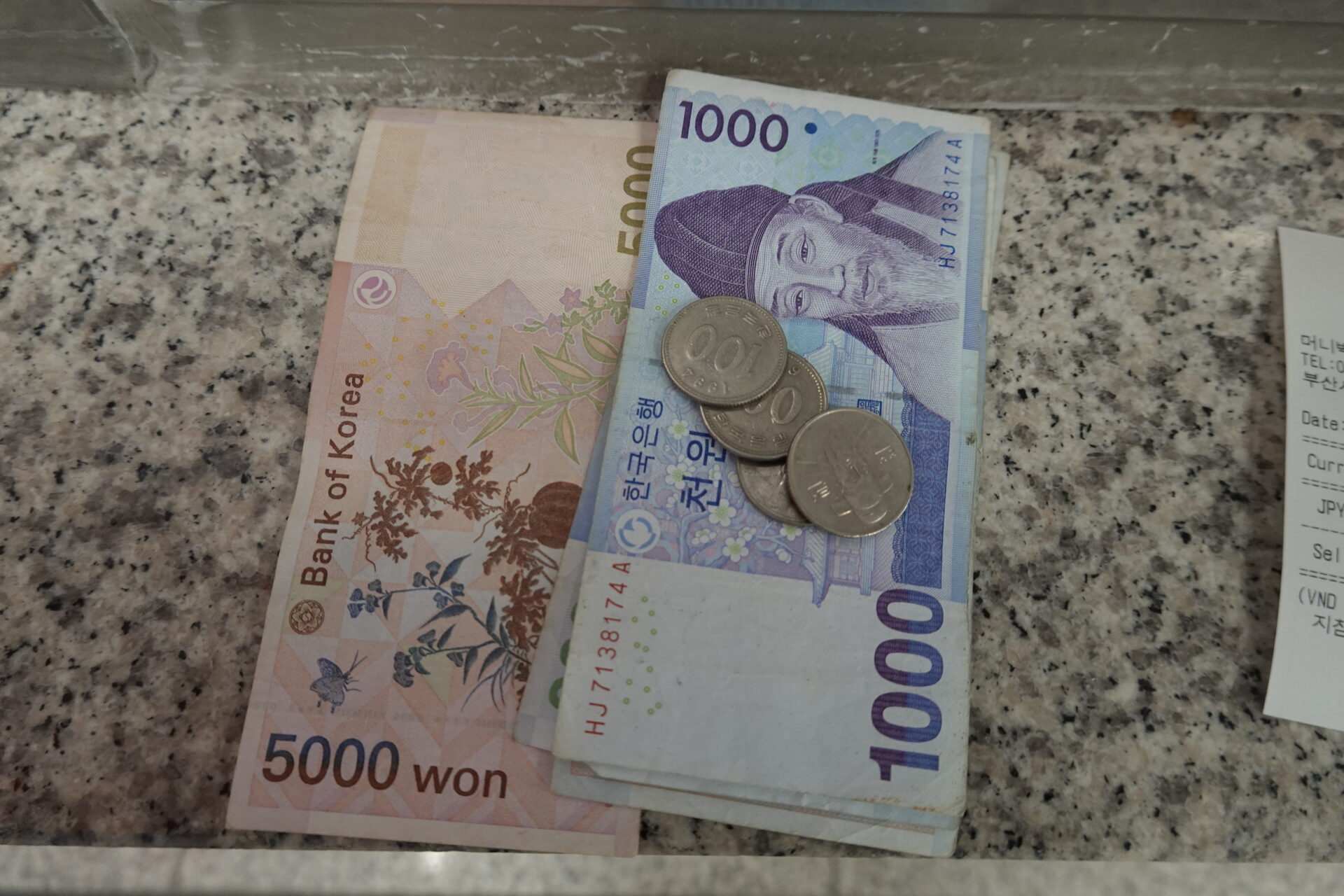
I exchanged only JPY 1,000 at the airport, which was roughly KRW 10,000 at the time. It covered my return train fare, a drink and a simple meal at the airport. Exchange rates and prices vary, so this should not be treated as a fixed budget. Cards are widely useful, but a little cash can help with ticket machines or small purchases.
If your timing becomes too tight for Sasang, staying in the terminal is the right decision. During my visit, I found charging points, drinking water and hot-water dispensers. Facilities may be moved or temporarily unavailable, so check the terminal signs or the official airport guide on the day.
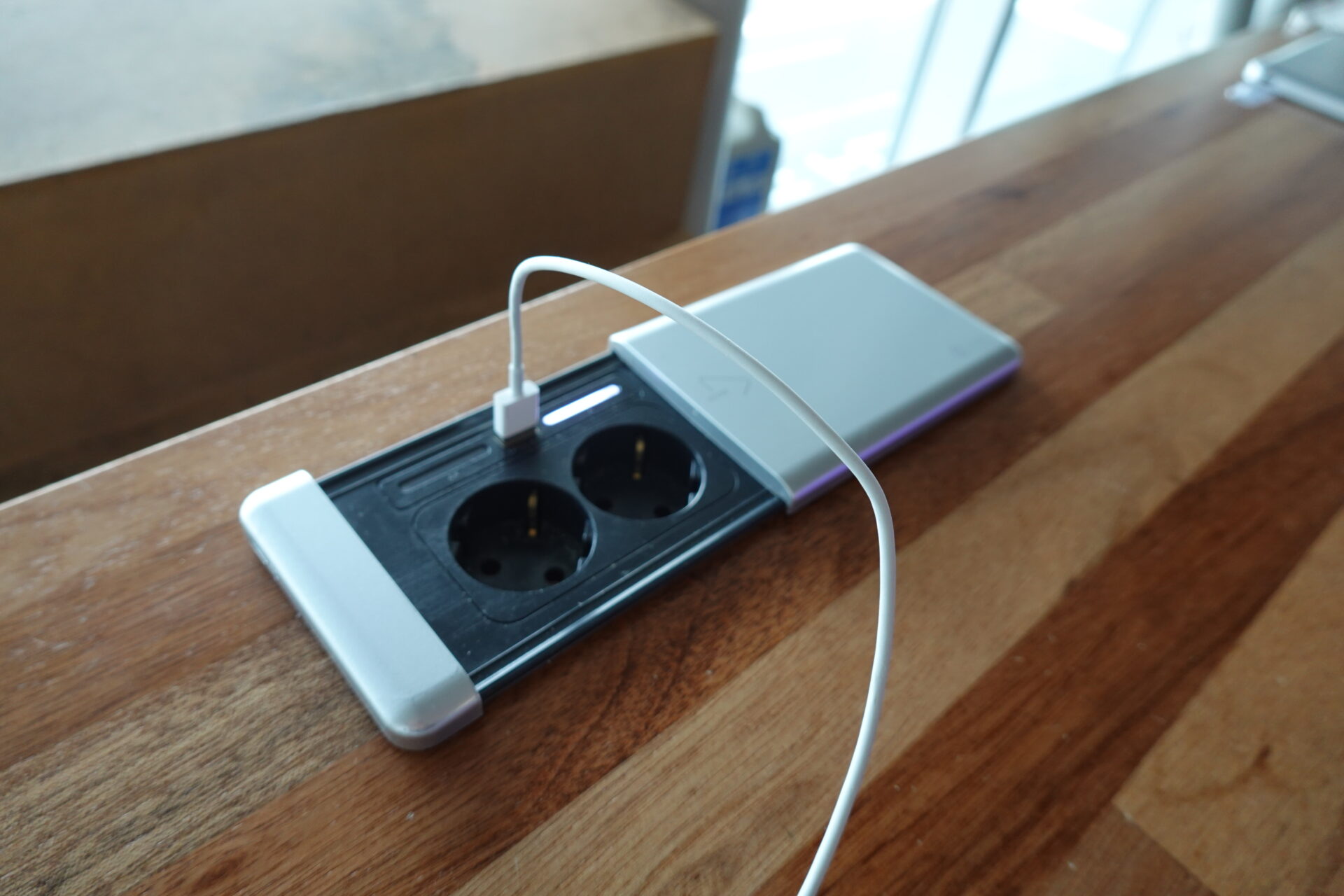
The charging area I used had USB connections. It is still safer to carry your own cable, power bank and a plug adapter rather than depending on an available port.
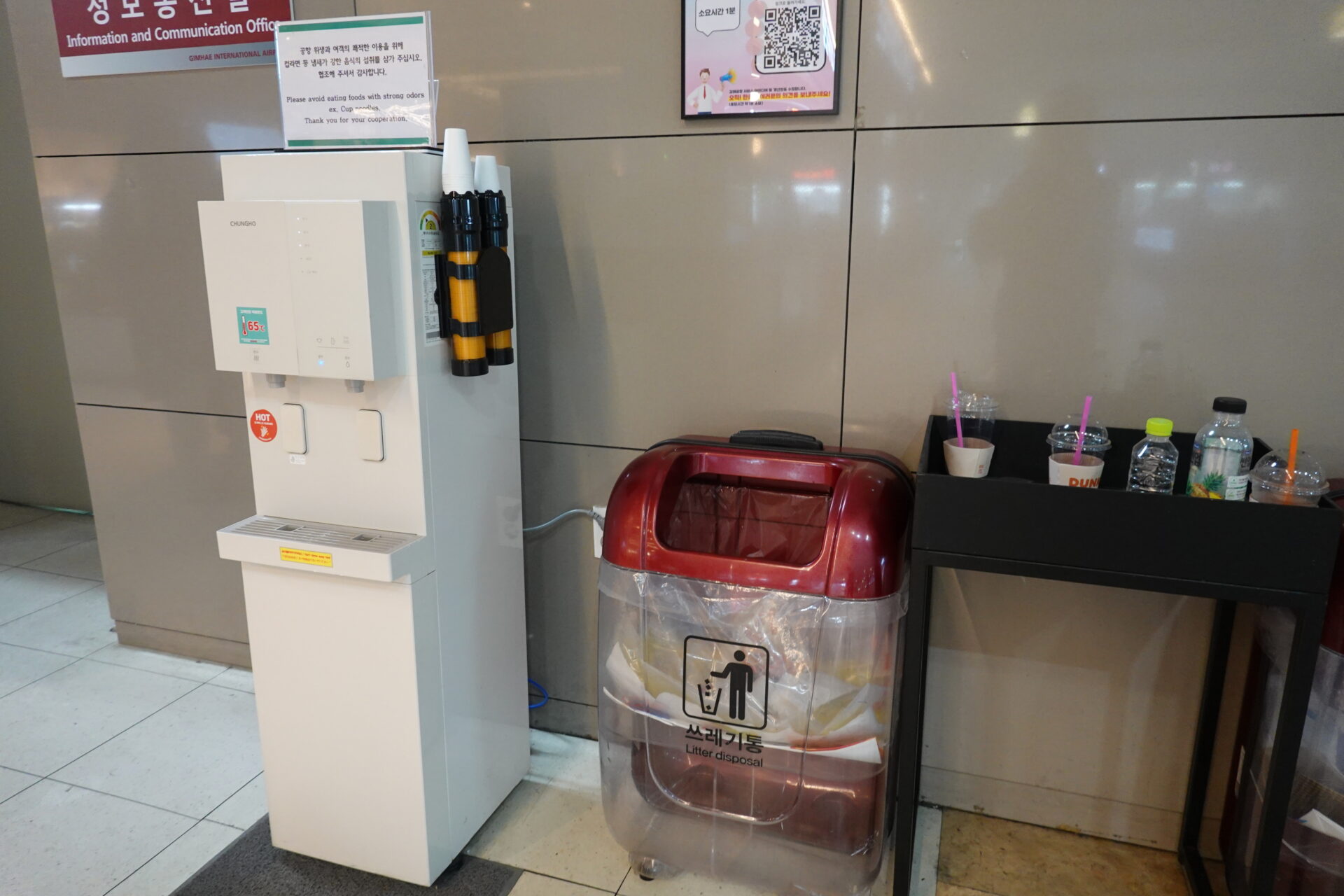
South Korea uses 220V at 60Hz, commonly with round two-pin Type C or Type F outlets. Check that your charger supports 220V before plugging it in; a plug adapter changes the shape, not the voltage. Do not use heating appliances or exposed-coil devices in the terminal unless airport staff explicitly confirm that they are permitted.
It can be, but it is tight for a self-transfer. Immigration, baggage collection and onward check-in can use much of that time. If everything is smooth, make the outing short; if not, stay at the airport.
Central sights require more travel time and create more risk during a short connection. Sasang is the more practical choice for a brief outing because it is close to the airport.
You may be able to use cards for many purchases, but a small amount of cash is a useful backup for transport or smaller shops. Check current payment options when buying your ticket.
Use the official Gimhae International Airport website for flight status, terminal facilities and transport notices. Your airline remains the authority for baggage, check-in and boarding deadlines.
My short trip to Sasang turned an ordinary wait into a small Busan adventure. The key was choosing somewhere close, traveling light and treating the return deadline as non-negotiable. If your connection is straightforward and you have a generous margin, Sasang can be a rewarding glimpse of local life. If the schedule becomes uncertain, the best travel decision is to enjoy the airport and protect your onward flight.
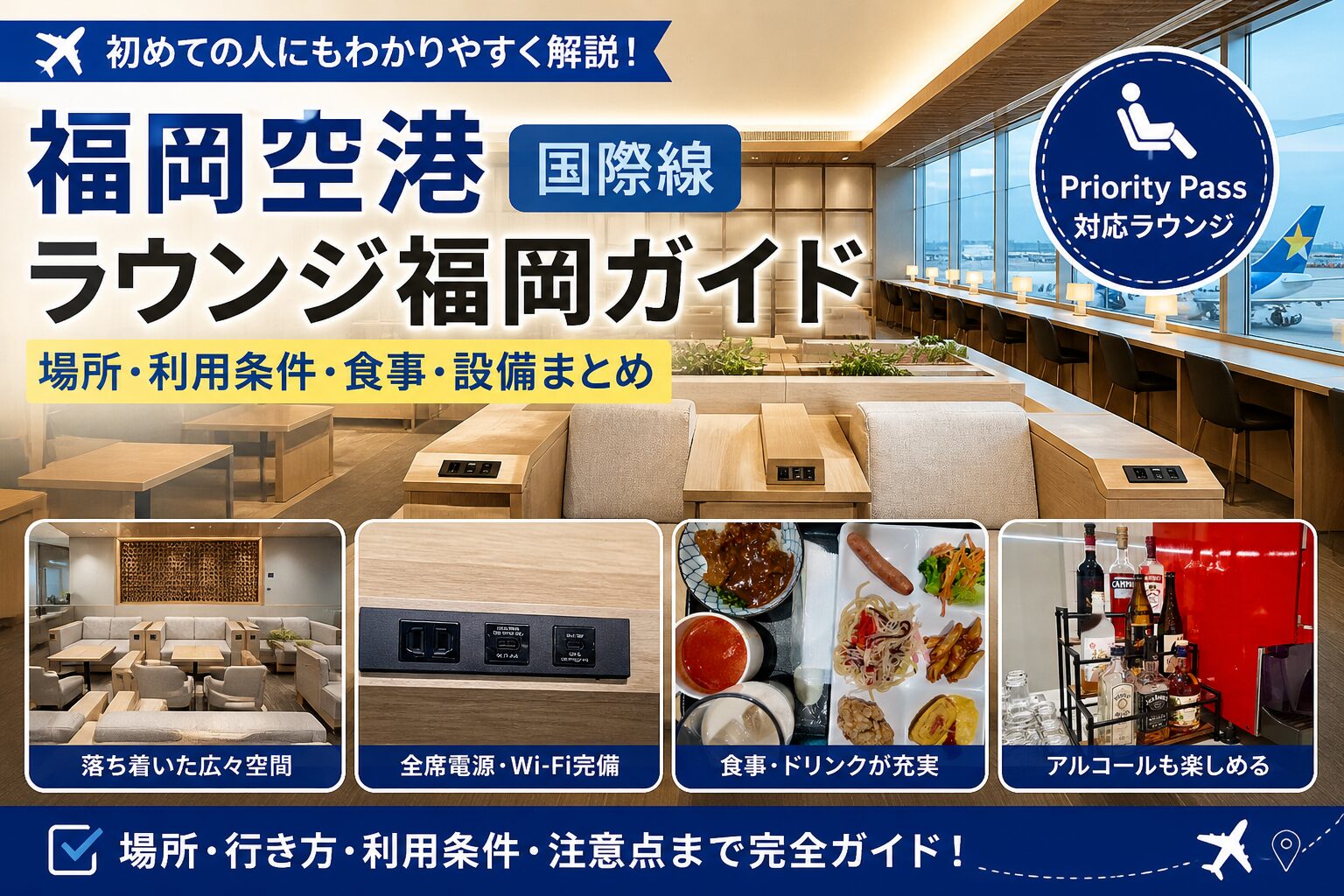
Flying through Fukuoka on another trip? See my Fukuoka Airport International Lounge guide.
Information check: Entry links and the temporary K-ETA exemption were checked on July 16, 2026. Prices and personal observations are from my February 2025 visit. Always verify current rules with official sources before travel.